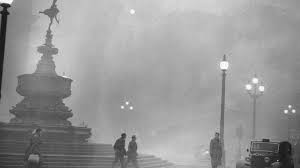
The great London smog of December 1952. Thousands of coal fuelled fires and a particularly cold winter combine to produce a smog that looks for all the world like a stage effect.
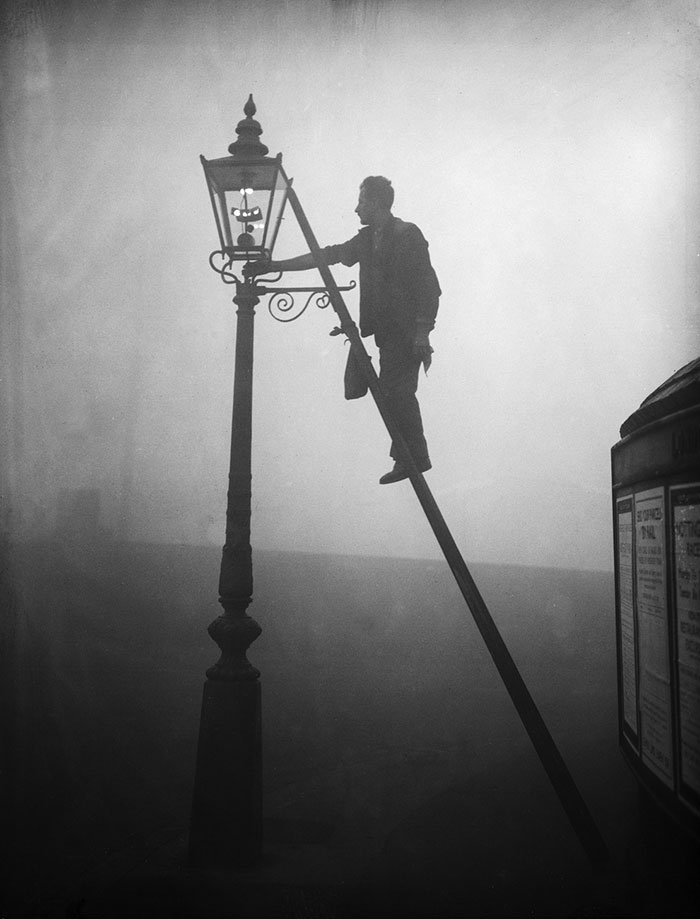
Yet, the “pea-soupers”, as they were fondly known, were infamous from a much earlier date. King James I, in the early 1600s, complained that smoke was corroding St. Paul’s Cathedral! But it was during the 19th century and the Victorian age which saw London enveloped in smog – both literal and imaginative. London was caught somewhere between the visible and the invisible, as the great writer Charles Dickens described it.
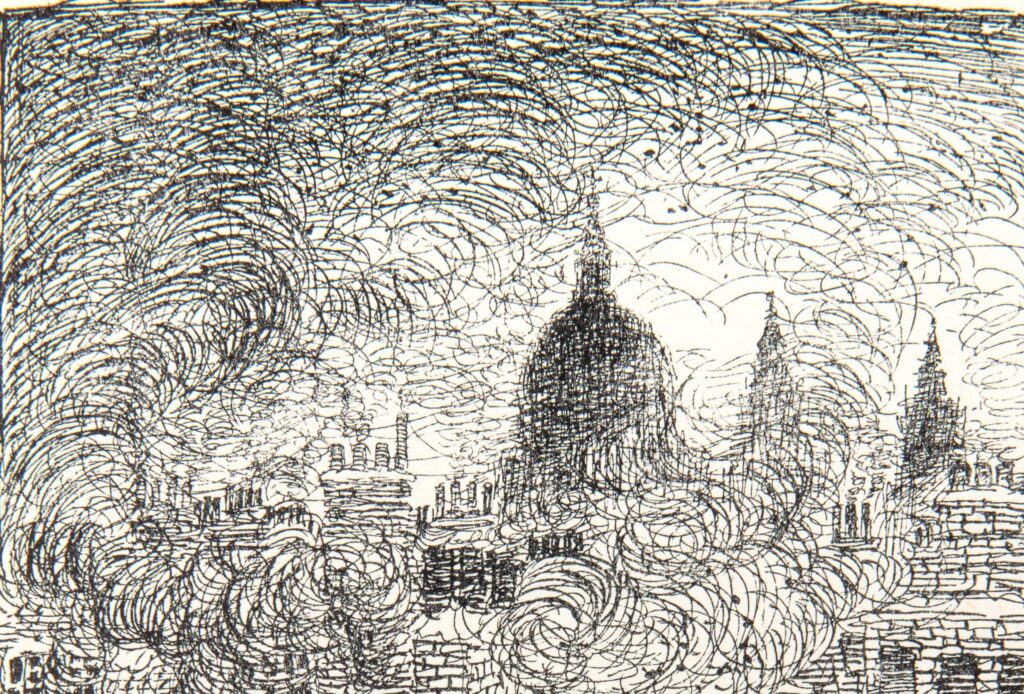
A detail from an illustration by Arthur Rackham for a 1915 edition of ‘A Christmas Carol.’
The great writer of both Christmas (‘A Christmas Carol’) and London, Dickens used the smog almost as a character in his fiction. A whole exhibition was once dedicated to this theme at The Charles Dickens Museum.
Let’s see how the memory of London’s smog is still used by contemporary writers…
Kate Bush’s ‘Snowed in at Wheeler Street’ details the ghost of a love affair that refuses to be buried, haunting different times from the Roman Era to the present day. It contains the beautiful line:
I lost you in a London smog as you crossed the lane / I never know where you’re gonna be next but I know that you’ll surprise me!’