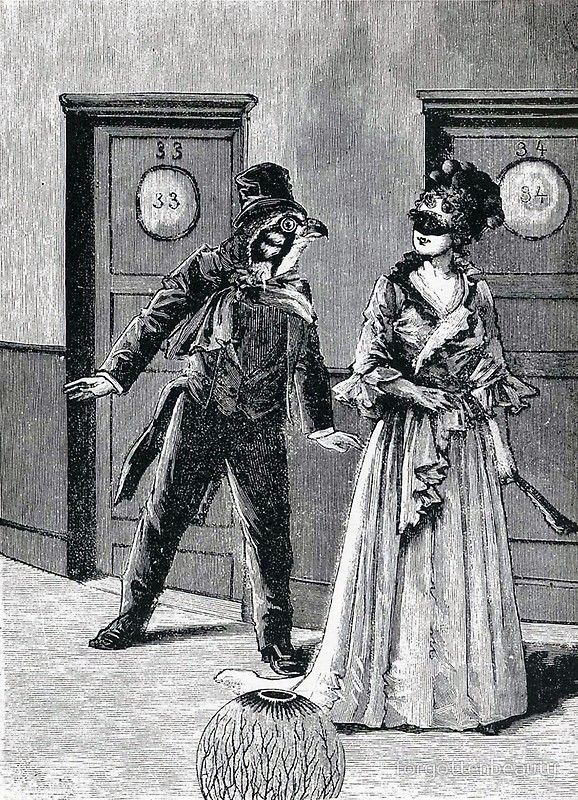
Switched on, in a corner of my room, sits a lamp printed with images from Max Ernst’s collage novel ‘A Week of Kindness’. Like that lamp, let me try to illuminate his dark, surreal world:
Max Ernst, the German surrealist painter, had begun to make collages after his service in the First World War. Indeed, it is tempting to read these mechanically reproduced fragments as an awful commentary on the fragmentation of bodies in modern warfare – order and reason overthrown. Of course the collage, that deliberate dislocation and reassembling of disparate elements, would also have appealled to his surrealist mind.
In 1934, he published his masterpiece ‘A Week of Kindness’, 182 images of incredible visual daring and inventiveness.
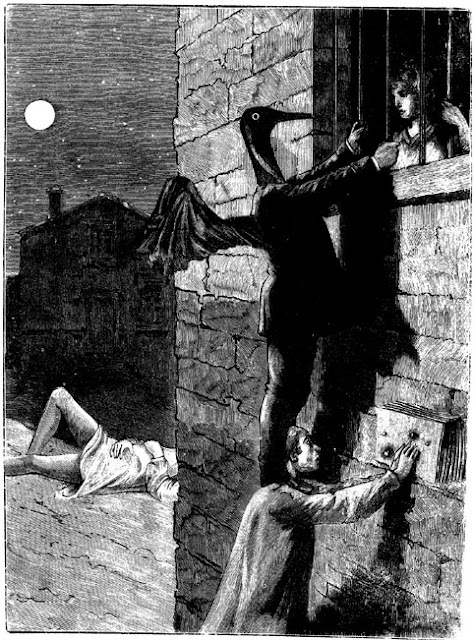
Cutting up 19th century novels, scientific journals and fashion magazines, much of the source material is English. For example, many of his cuttings came from the original illustrations to the poet John Milton’s epic ‘Paradise Lost’.
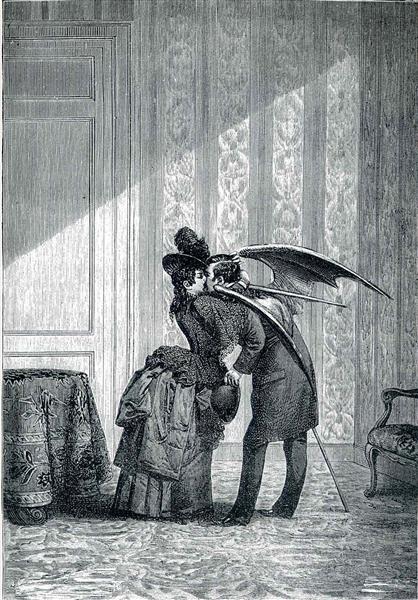
As is suggested in the short film clip below, the viewer is invited to read this visual ‘novel’ as they want to interpret it…
For me, it is impossible not to see a subversion of Victorian, bourgeois Britain – the hypocrisy, the repressed violence and sexuality – dissected by his scissors. A kind of visual equivalent of the “magical mirror” held up to the Victorian age by Oscar Wilde’s novel The Picture of Dorian Grey.
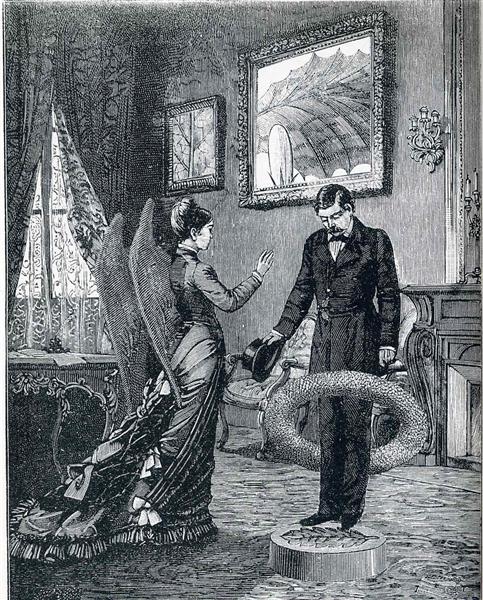
But ultimately, it is a strange, unclassifiable and unexplainable work. As Ernst himself said:
‘Before he goes into the water, a diver cannot know what he will bring back’