‘I tried my best and could do no more’ [the last words of Alice Ayres]
In the heart of London’s financial district, where money often counts more than morals, there is a tiny handkerchief of green called Postman’s Park. Exactly at the turn of the new century, 1900, an idiosyncratic memorial was constructed here to honour the bravery of ‘ordinary’ heroes who had died trying to save others.
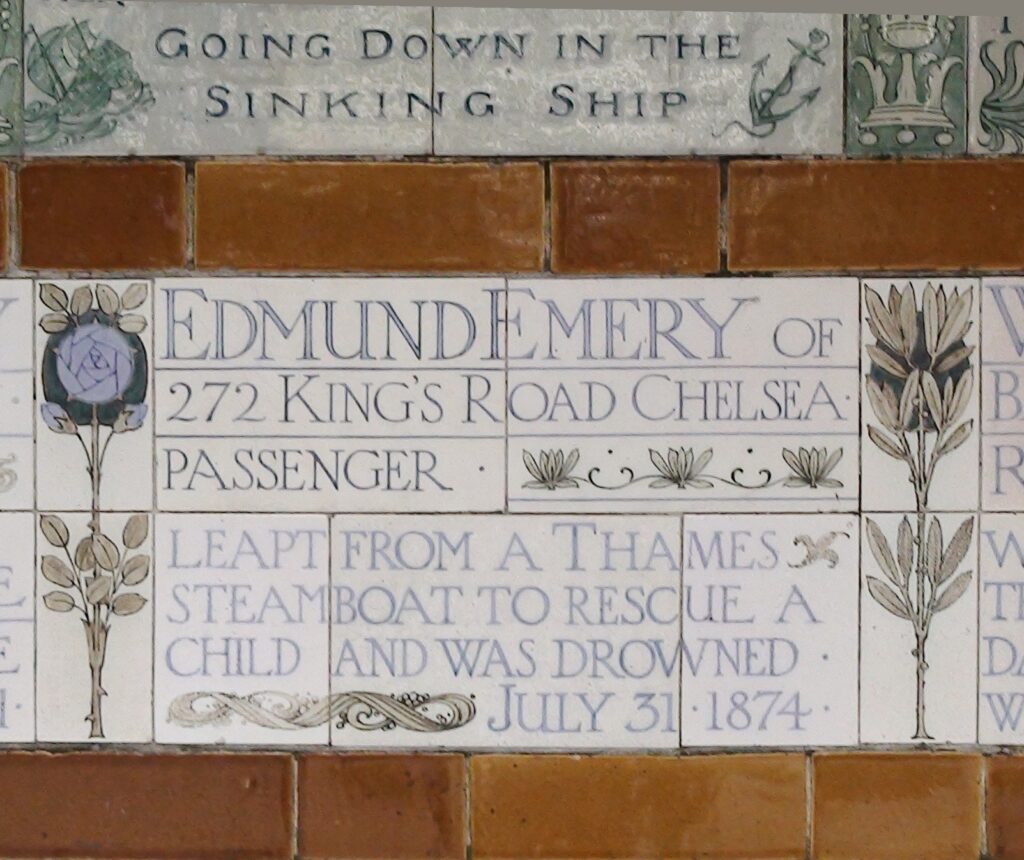
It all began as the seed of an idea in the mind of the great Victorian artist George Frederic Watts and as such this ‘Letter’ is something of a companion piece to two earlier posts: ‘Watts Gallery’ and the ‘Watts Chapel’. Watts believed that true nobility was not confined to the upper classes but dwelt instead in the hearts of ordinary people irrespective of their social status. As grand public memorials seldom reflected this, he set about to build one that did. Collecting newspaper cuttings of ‘everyday’ heroism, he commissioned the hand-painted ceramic tiles that now form the 54 memorials in Postman’s Park:
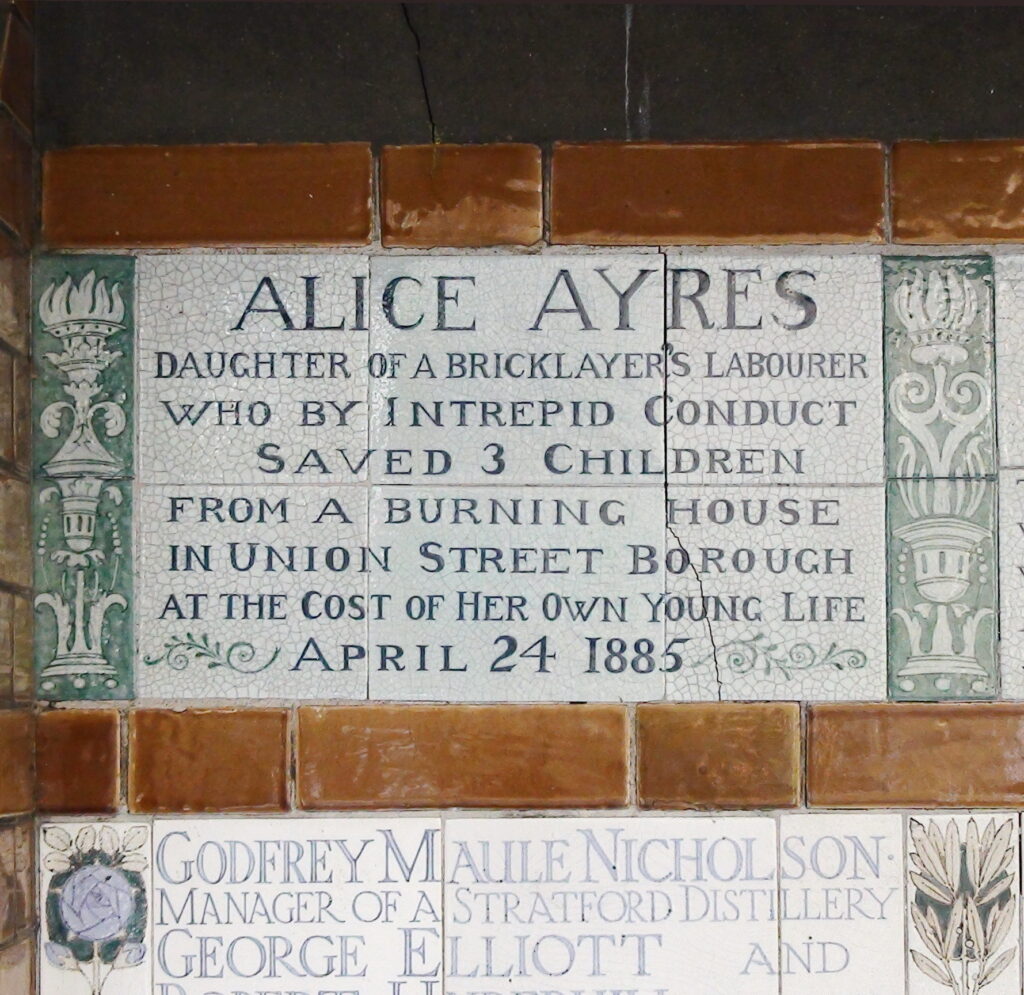
Many of the stories strike us strangely now – providing a snapshot of a long gone Victorian England. There is the performer’s dress that goes up in flames after catching on the old theatre gas-lamps, a runaway carthorse that gives a fatal kick and an exploding steam train.
In the sheer variety and specificity of this catalogue of tragic accident, there is, without doubt, an absurd even comic element!
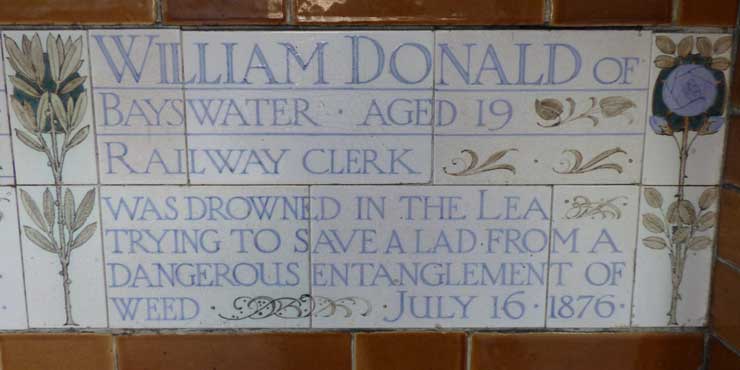
And yet, there is something about the earnestness of this memorial, alongside the aesthetic beauty of the tiles themselves, that makes this small space under a simple black awning incredibly touching.