The Bayeux Tapestry was not made in Bayeux, France and it is not a tapestry. It was made in Canterbury, England and it is an embroidery.
Hand-stitched by nuns – woollen yarn on delicate linen – this 70 metre retelling of William the Conqueror’s victory over the Anglo-Saxon King Harold has survived for almost a 1000 years.
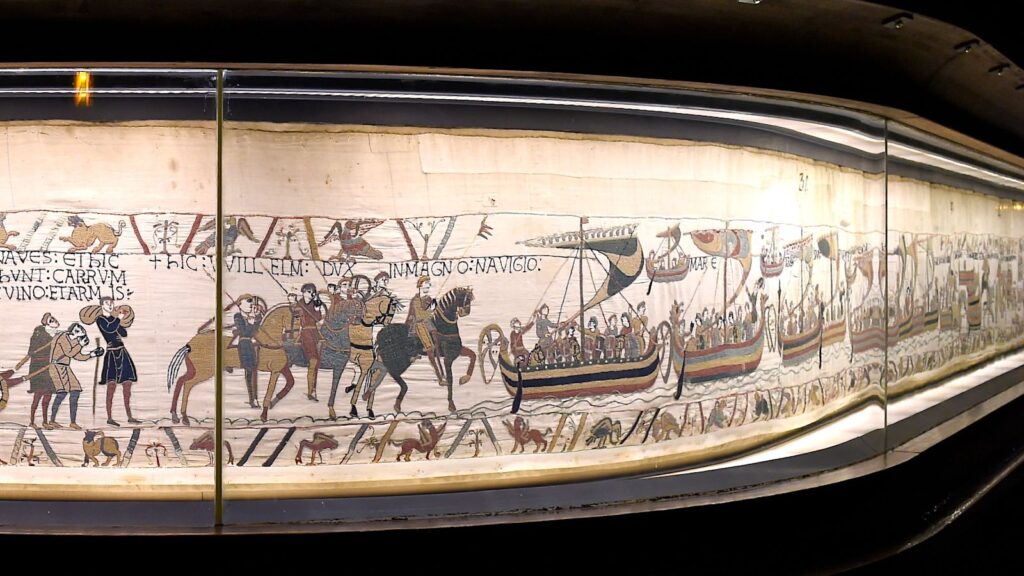
Made in the 11th century, it is a piece of almost unparalleled historical importance, telling historians so much about medieval life. A true epic of over 600 figures, 200 horses, 40 ships; depicting Kings to mythical beasts, Knights to mysterious ladies:
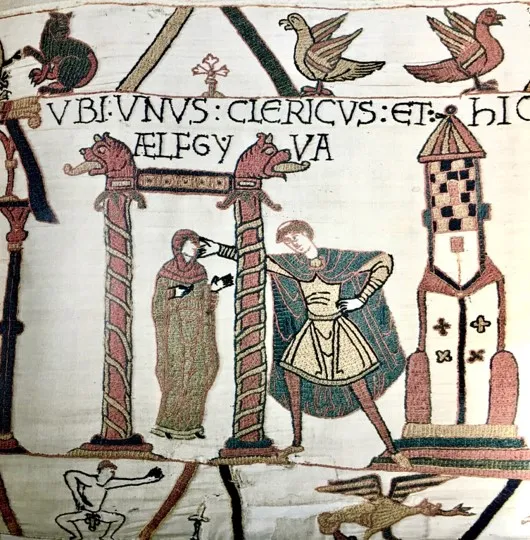
Here we see a cleric touching the face of the mysterious Aelfgyva, obviously an important figure, as she is named. But who was she? We don’t know. She has slipped out of history, forgotten – but not quite -because this wonderful scene materialises her again. No wonder the tapestry was given a UNESCO ‘Memory of the World’ status.
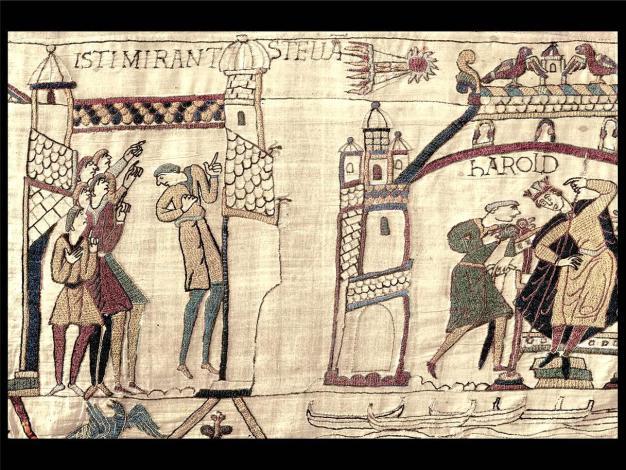
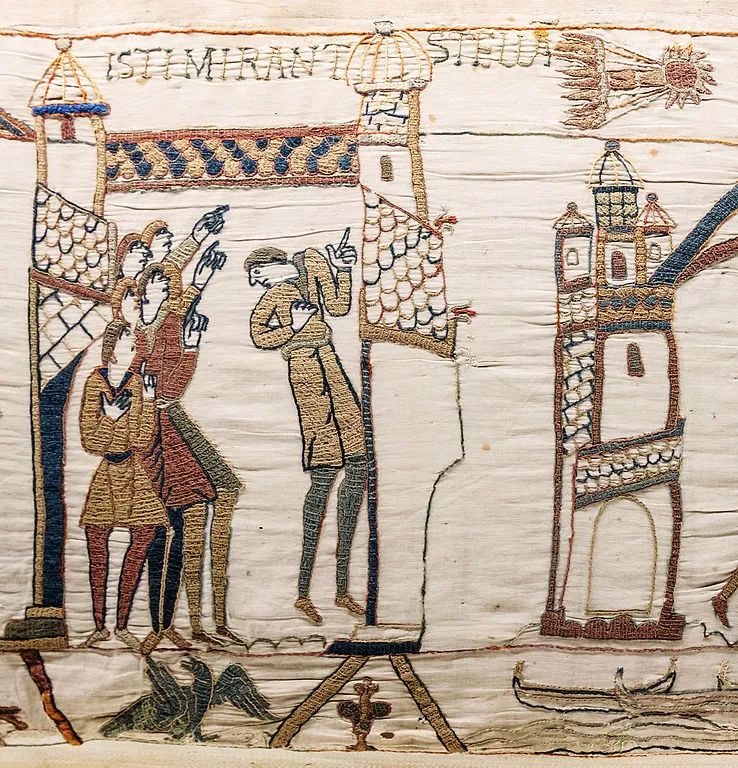
Maybe my favourite scene is the earliest recorded depiction of Halley’s Comet, which blazed across the sky in 1066. Look at the horrified faces of the crowd pointing to this ‘hairy’ ball of light. They fear it as an omen of the coming war!
The continued existence of this flimsy piece of material is nothing short of remarkable – in the French Revolution it was almost used as a wagon cover!
After 900 years, there is a possibility that these Norman ships will sail once more to English shores…but this time in friendship, as the French Government is considering loaning it to London. Let’s hope it has a safe trip!
This animation shows the tapestry come to life – the ships sailing, the knights battling: