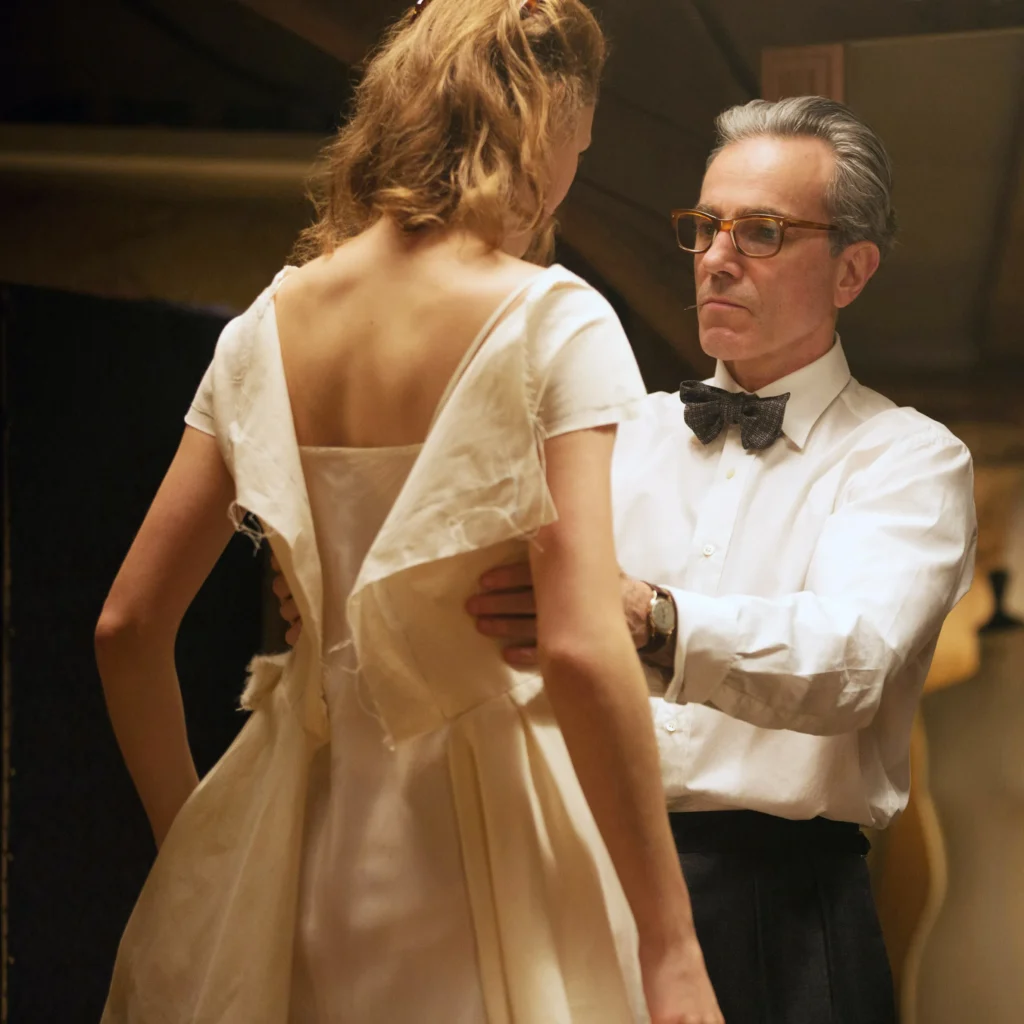
The Phantom Thread – a film by Paul Thomas Anderson – is strange, beguiling and beautifully crafted.
In fact, it is so meticulously tailored and structured that the film’s protagonist, fashion designer Reynolds Woodcock, would be proud. It seems, attention to detail makes a great dressmaker and a great filmmaker too.
Set in London in the world of a 1950’s fashion house ‘The House of Woodcock’, Anderson has woven many realistic details into the fabric of his film. For example, I recognised some of the behind the scenes freneticism of the fashion show from reading Alice Rawsthorn’s biography of Yves Saint Laurent. Anderson has himself noted that the concept of a dress giving ‘courage’ comes from a famous quote made about Cristobal Balenciaga’s dresses. He also took the idea of a secret message being sewn into the lining of a garment from Alexander McQueen’s admission that he used to do this as a tailor on Savile Row.
Yet, despite these moments taken from the real world of haute couture, I love the critic Mark Kermode’s notion of looking at the film through the lens of fairy tale. Indeed, for me, it is part fairy tale, part ghost story. The film is, in so many senses, ‘haunting’ – it certainly continues to stay with me.
There are nods to literature too I feel. Jane Eyre, Rebecca, and the amazing scene when Reynolds follows Alma to the New Year’s Eve party, losing sight and control of her in the crowd, recalled similar scenes in Chekhov and Proust.
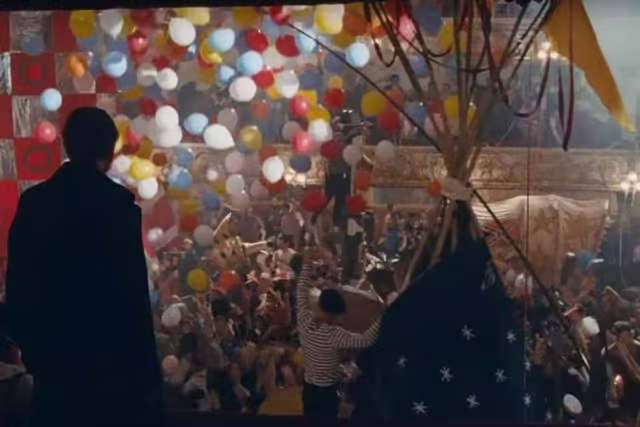
The more you look, the more you see. It is such a richly layered, beautifully textured masterpiece.
It is also very, very funny!
If you want to see just how mesmerising Daniel Day Lewis is, watch this tour de force of acting – a man starving himself of love, ordering a very substantial breakfast.