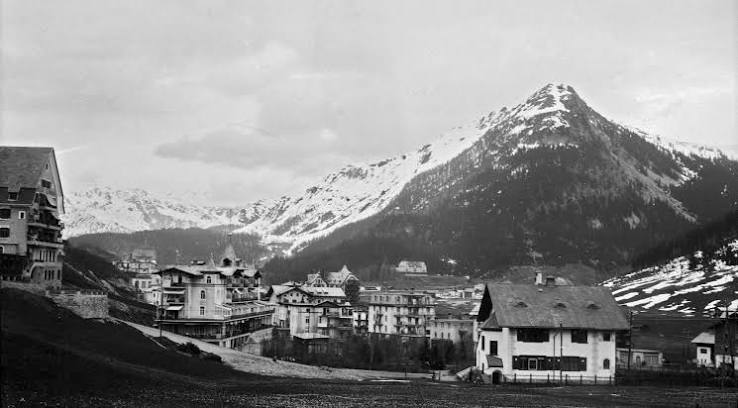
After reading Thomas Mann’s novel The Magic Mountain one scene has always remained with me – the borrowing of a pencil.
The novel’s protagonist, Hans Castorp remembers himself as a shy schoolboy borrowing the pencil of his classmate Pribislav Hippe, the then object of his infatuation. The temporary possession of this pencil becomes a conduit for his unfulfilled romantic longings. This leitmotif then returns in the novel, when, years later at the Berghof sanatorium the borrowing of a pencil again suggests the possibility of erotic fulfilment, this time with Claudia Chauchat an enigmatic Russian patient.
I was unsurprised to read that this episode was drawn from Mann’s own schooldays and his love for a fellow pupil. It is one of the greatest passages in literature – every word has the ring of real feeling.
Between 1940-1945 Mann undertook a series of 58 radio addresses. From his exile in American, he used the BBC German Service as a vehicle to reach into his compatriot’s homes and deliver his antifascist message. I think of these broadcasts as passing around a symbolic pencil once again – from America, to England to Germany. Only this time the pen is political.
Written in his new home in California, Mann had to first record his voice onto wax discs. These were then flown to New York where they were transmitted via telephone / undersea cable across the Atlantic to London. Here, they were re-pressed onto a second record and finally broadcast on long wave radio into Germany.
Entitled ‘Listen, Germany’ these 5-8 minute radio addresses were like letters of appeal. If a letter is to transmit someone’s thoughts from faraway, the spoken missives from the great German writer gave his fellow Germans a piece of his mind.
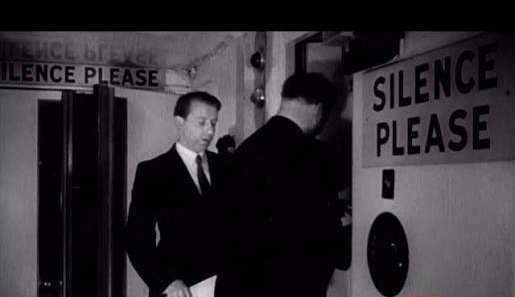
Of course, Mann’s link to the BBC was only a small part of the British Broadcasting Corporation’s war time efforts, as this sort clip reveals: